Showing posts with label congress. Show all posts

Tuesday, February 28, 2017

Never Turn Down A Meeting With An Aide


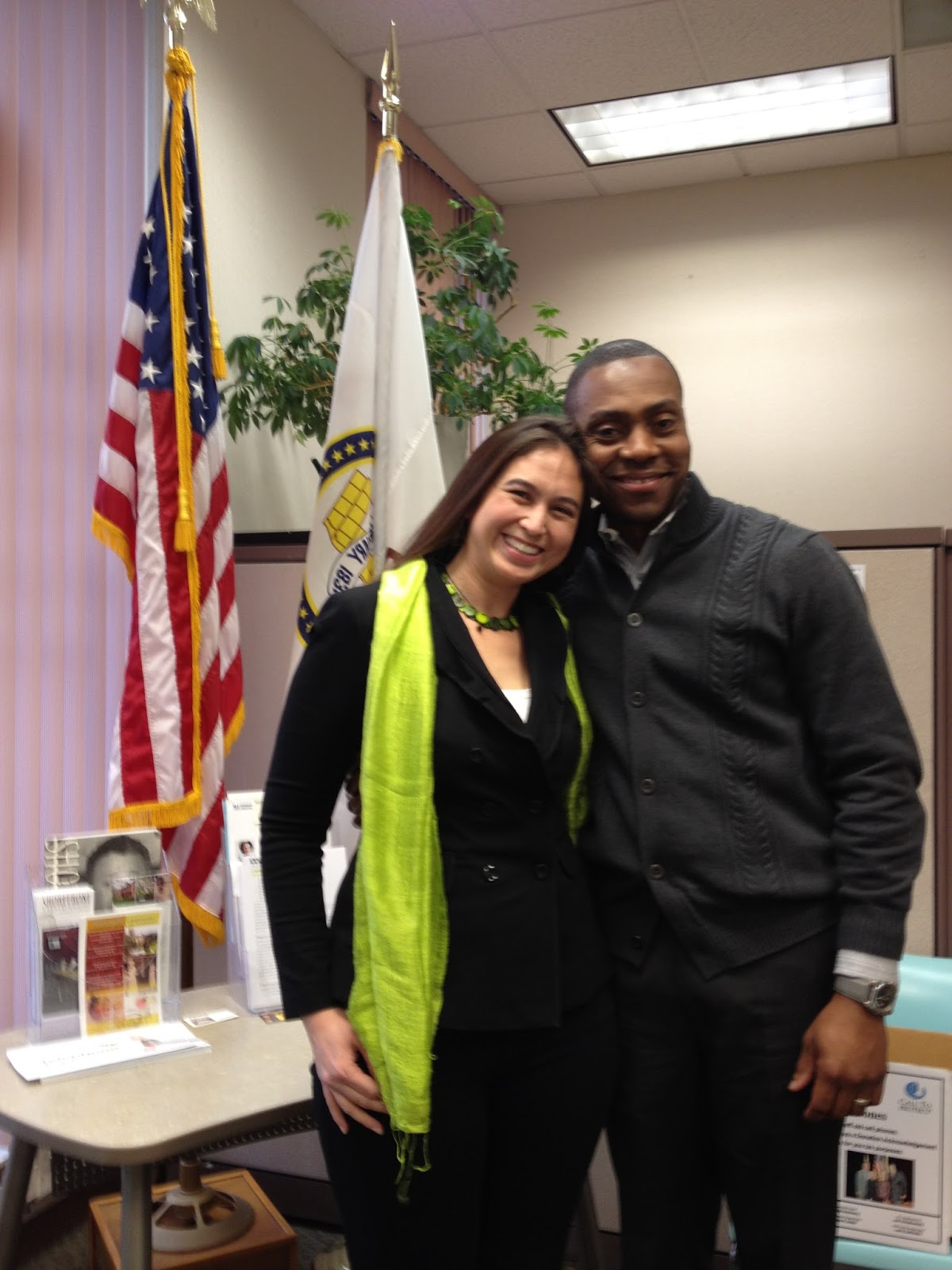
My last meeting with an aide I with whom I had
lobbied for about 5 years. Then, I moved
and he changed jobs. Miss you, Dave!
There has been a lot of fuss lately over the inability of constituents to get face time with federal members of Congress (let's call them MOC's for short) and irritation at being passed off to talk to aides. As a long-time activist, I understand this frustration. When We the People have something to say about abuses of justice and rights, we want to see the person in charge...and we want to see him or her RIGHT NOW. We're Americans. It's what we do. 

At the same time, I sigh inwardly when novice activists demand our outrage because they walked into the local office (unannounced) and couldn't see their U.S. representative (who wasn't on the premises). In politics, there are lots of things to be outraged about, but if you want to increase your chances of changing an MOC's mind and gaining them as an ally, it's important to know what's realistic to expect from a congressional office.

When volunteer advocates first start out, we can get fired up with entitlement knowing Congress works for us and is paid by us. This is true. But it's also true that they have many demands on their time. Even with the most constituent-friendly representatives who like your issue, you probably won't get to meet with them more than twice a year, it generally takes several months to line up an in-person meeting, and it's easier to get a face-to-face meeting with them in Washington D.C...although it will usually only be about 15-20 minutes long. Senators are even harder to see.

I'd like share some basic truths I've seen about lobbying and life:
  • Like when you seek out your professor, your member of Congress is not sitting at her desk simply waiting to talk to you without an appointment.
  • Like when you take your kid to the orthodontist, if you show up 15 late to an appointment, you probably missed it entirely. 
  • Like when you take preschoolers to visit the firemen, your meeting might have to be delayed because of sudden, serious matters that you really do want him to attend and you may never get to know what that reason was.
  • Like when you need to talk to the PTO mom you snubbed at the potluck, your request for a meeting is not going to be top of her list if you've shown her public disrespect.
So, if there are understandable, human reasons that your member of Congress can't see you quickly, how can we still have our voices heard?

Enter the person with a reasonable compromise: The Congressional Aide.


I'm only including this meeting pic with Senator Blunt's aide
because President Truman's old office is so pretty and
my daughter's photo bomb is so funny!
NEVER turn down a meeting with an aide. Even though you might have the impression that they are just an "assistant," they can actually have more sway over your issues than most people think. I've now met more aides than I can count or even remember names for. Some have been joys to work with...others, less so. But I have found all of them - Republicans and Democrats - to be respectful, professional, and courteous when we offered them respect, professionalism, and courtesy ourselves.

An aide's job is to represent the senator or representative and hear your concerns when the boss is not available (which is most of the time). The role they play in your meeting will depend on their own years of experience in the office, their job description, and how much their boss trusts them. 
Pro tip: Yams on the table make a welcome addition to any
meeting about nutrition. 

What roles can aides play in your meeting?

They can be messengers: This is pretty much always the case. If they are taking a scheduled meeting with you, their job is to listen to your concerns and pass them on to the MOC with their recommendations. 

They can be issue experts: Most aides - especially in DC offices - have a particular job responsibility and therefore know more about issues that fall in that scope. I've known aides that have covered education issues their whole career and those that specialize in foreign affairs. Aides in the local district offices tend to be more "jacks of all trades" because the local offices are smaller, but I even know one local aide who is the point person for all her boss' activities in opposing sex trafficking within U.S. borders...that's pretty specific! Anyway, you want to make sure that you request to talk to the correct aide for your issue and be aware you might be talking to someone with deep knowledge of your topic.

They can be gatekeepers: They have quite a bit of influence with the scheduler in deciding who gets face time with the MOC or not. Sometimes this depends on your issue, but I really do think it has a lot to do with whether you present yourself as a rational human being or not. If you show up yelling curse words or wearing a chicken costume or something else meant to shame the office, you probably just blew your chance to have a productive back and forth conversation with your senator.
Building a relationship with Senator Durbin's aide (right) got
Richard Smiley and I tickets to a Congressional Gold Medal
ceremony for Muhammad Yunus because he knew our names
& that we supported microcredit lending.

They can be your champion: Here's a secret....aides don't always agree with their bosses on everything! I once worked for two years talking to a polite, but disinterested aide trying to get a certain Congressman to do anything at all on global poverty. Then, one day, that aide wasn't available and we ended up talking to his press secretary. I could've chosen to be offended and turn down the meeting, but I went in with my group and pitched our bill anyway. Turns out this aide was a young woman from a family who had adopted a family from Somalia. She showed us pictures of her Somalian siblings standing up at her wedding. She knew better than we did what the devastating affects of extreme poverty were to individuals. So, even though she wasn't the official issue expert, she presented our message to her boss and convinced him not only to sign the bill, but to publish an opinion piece in our local newspaper about it...one that I have no doubt that she wrote for him. And next time we asked for a face-to-face meeting? We got it.

Not only does this Chief of Staff have the authority
make decisions in the Congresswoman's absence, she
was willing to give my volunteers a tour of her super-full 
in-box & email to show why it's important we 
keep in touch with staffers regularly. 

They can be decision makers: Three times I have been surprised that I was sitting with aides who were actually empowered to grant my request WITHOUT consulting the member of Congress first. Holy cow. That's enough to make me treat everyone that way just in case! Aides who can do this are usually 1) Issue experts who know the MOC's position so well that they can anticipate which bills their boss will want to sign 2) Chiefs of Staff who take your meeting because they are interested in your issue or happen to be filling in for more junior aides for whatever reason.


They are ALWAYS human: They are always human beings worthy of your respect. Yes, they are paid by our taxes, but they're still people just doing their jobs. It is always worth taking the time to ask her what brought her to this line of work or ask how his day is going. They are often also constituents or former residents of your state, so it rarely takes very much small talk to find something you have in common. They are never deserving of unsolicited curse words and personal attacks. They don't have to be your best friend, but cultivating a friendly relationship with an aide might be the best thing you can do for your cause.

So, to recap...
What an aide can be: 
Messenger, Issue expert, Gatekeeper, Your Champion, Decision Maker, Human

What an aide isn't: 
Your Punching Bag


Do you have a story about how working with an aide created a positive outcome with you member of Congress?


Wednesday, October 29, 2014

Keeping the Motivation UP!

I had a tough run this week. 11 miles training for my RESULTS fundraising half-marathon run. The distance wasn't even what made it so hard. It was the fact that I had to get it done while my 9-yr-old was getting ready for school. It was broken up into chunks while I was multi-tasking. Here's what it looked like:

Starting back again at zero
miles is depressing after
running 6 already!

  • 5 miles on the treadmill before anyone got up
  • Wake daughter
  • 2 miles outside while husband was still home
  • Make sure kid's doing chores and eating breakfast. Goodbye to husband
  • 4 more miles on the treadmill
5+2+4=11. Whew.

Two miles outside made kept up my spirts
for the 9 miles on the treadmill
It's incredibly hard to keep focus on an exhausting task when you are interrupted and doing other things at the same time. Inertia can sometimes be your friend since an object in motion tends to stay in motion. But it can be your enemy since an object at rest tends to stay at rest. Getting back onto that treadmill was the hardest thing I've done all month.

This is not unlike what happens when you play the long game in activism, working on an issue like global vaccines. We fight and lobby for immunizations for children to secure funding for the GAVI, the vaccine alliance and fight diseases like polio, measles, and rotovirus. Sometimes we have big wins, but sometimes there are long distracting pauses in the legislative process during which life happens. Congress is in recess. Kids soccer games, choir performances, and scouting activities happen. School happens. We forget about what we were doing and when appropriations season (the time when Congress decides how much money to give in a year) or pledging time (the time when the President decides how much the U.S. should be giving) comes around, we have to fire up our engines all over again. But I do. Because this is important. Way more important than my run this morning.

It's so easy to think that we can let the issue go because vaccines are kind of a no-brainer in the fight for global health. They are a "best buy" when you think about the value of a low-cost vaccine that buys a child lifelong protection from disease. How do you even put a value on the precious life of a child? And the value on the dignity of a mother who was protected by immunizations as an infant so she can work to provide for her own kids free of illness?...priceless. With all the benefits to saving lifes and bolstering of world economy, you'd think that it would be automatic for Congress to pass adequate funding.

But it's not automatic. 

It's a fight. Every. Time.

One of my Twitter followers saw my updates urging people to tweet the White House to ask the administration to pledge $1 Billion over the next 4 years for GAVI. He did take the action, but said something insightful. He stands up for issues that are little known or publicized, like human trafficking - which is very admirable and I strive to do the same - but tweeted that he expects our elected officials to take care of those widely known issues without his input. 


I'm glad he voiced this. I understand that viewpoint and it's true that it's hard to stand up for all things all the time. Sadly, though, it's just not true that lawmakers do the moral and smart thing even if the benefits are well-known. I've been on the losing side of advocacy battles, too, when child health programs have been slashed on the state or federal level. 

This is why it's important to keep up the momentum and remember to strap on your shoes and get back in the race at those key moments for global vaccines...like this moment. Right now!

We are on the cusp of the pledging event where all the world's nations will send representation to Berlin to publicly say how much they will pledge to the GAVI Alliance. We want the U.S. to step up and pledge $1 billion over 4 years to the GAVI Alliance, which will have the effect of saving 6 million kids' lives.   


Will you join me in getting back in the game?

Three EASY ways you can join the fight for children's lives:

  1. Sign this petition from the ONE Campaign to the White House.
  2. Tweet the White House with this message: "Friends, PLEASE Retweet: @WhiteHouse save over 6M kids' lives by pledging $1B over 4 yrs to @GAVI #AYAAction #VaccinesWork"
  3. Call the White House by dialing 1-888-213-2881, which will connect you directly to the White House comment line. When the operator comes on the line, tell them: “I am asking President Obama to help save 6 million children’s lives by pledging 1 billion dollars over the next four years to Gavi, the Vaccine Alliance. Thank you.” (If you're worried about this one, go see my past blog about how easy calling in really is.)

I hope you will join me in taking one or all of these actions. Even taking all of them would take less than 20 min, but have enormous impact on our planet while costing you no money...except for your taxes and you have every right to weigh in on what they are spent on. Help us keep up the motivation!


Monday, June 2, 2014

Advocacy Made Easy: Teaching Kids to Write to Congress


How far did you walk for your last drink of water? Was it clean water? Safe to drink? How much water would you drink if you had to walk for hours to fill up a canister for your whole family's daily water supply?

These are questions 4th graders at Park View School in Morton Grove, IL have been pondering for the last few weeks. Guided by their teacher, Debby Schmid, they read A Long Walk to Water by Linda Sue Park. It's a great book to introduce elementary school students to some of the challenges their peers in Sudan are facing right now. The story, brilliantly told in alternating sections, tells the tale of two Sudanese eleven-year-olds in different times (2008 and 1985). The fictional girl based on current life in Sudanese children, Nya, spends hours each day carrying water making two trips to a pond every day for her family, deprived of education. The boy, Salva, is a real person...one of the "Lost Boys of Sudan" - survivors of Sudanese civil war - who had to flee his country on foot looking for his family and safety. Water is a theme and focus of the book.

Giving some context of how hard it is for a bill to become a law
before showing the SchoolHouse Rock video, "I'm Just a Bill"
My portion of the program came when the students were ready to ask that critical question: "What can WE do to help people have water?" Ms. Schmid and I wanted these gifted youngsters to dive in to make a big difference and also learn some great lessons for both writing and life. We created a field trip to the Morton Grove Public Library to fill up empty water jugs and carry them back. At the library, they would learn about how the U.S. helps people in developing nations gain access to clean water and what our role is as citizens to help make that happen. 

Right now, there's a bill in Congress called the Water for the World Act of 2013. It's an update of an law that directs how U.S. foreign aid helps people in extreme poverty get access to clean water and sanitation. The Water for the World Act of 2005 said we should focus water and sanitation assistance toward the countries, locations, and people with greatest need. Yet countries with the least need receive more funds than those with greatest need. This new bill will help make sure that the people who need the most help will get the most help...without an increase in funding!

With the help of the all-time BEST training video for explaining how a bill becomes a law, the 1975 SchoolHouse Rock "I'm Just A Bill" segment, I showed them that the World Water Act is at the point where we, as citizens, can help it to be passed in the House of Representatives by writing to our U.S. representative and asking her to co-sign the bill.

I taught them the very same method for letter writing that I teach to grown-up RESULTS volunteers. When writing a letter to Congress, it helps to follow this tried and true "EPIC" format to create a clear, effective, one-page handwritten letter. This is what EPIC stands for:

No joke...these kid-letters are gonna be EPIC!
Engage: Grab the reader's attention with a question or a startling statement. You could use a surprising statistic or a question.

Problem: State the problem that you want the reader to address.

Inform (or Illustrate): Inform the reader of the solution or illustrate how the solution can help.

Call to Action: CLEARLY state what you want the reader to do. It's best if you can do it in the form of a question that should be answered with a "yes" or a "no."

This same format can be used to create a "laser talk" or "elevator pitch" for your issue, but in this case, we encouraged the kids to write just one or two sentences for each section to create their letter. I had them tell me about what they learned from reading A Long Walk to Water and watching videos from the Water for South Sudan organization, so that the letters would be truly their own creations.
The kids gave me their own bullet pints to use for the "Problem" portion of the EPIC format.


z
Carrying water through neighborhood streets
I was impressed by these kids asking great questions like "If Jan Schakowksy cares about poverty so much why do we need to write her letters?" (Answer: Because hundreds of bills are introduced every year and even her awesome staff can't keep track of everything!) and "What kind of people wouldn't want to help people get water...evil people?" (Answer: Ummm...more like people that don't fully understand the issue or ones that are worried about running out of money. And evil people, I guess.)

After turning in their letters, we loaded up the kids with their filled water jugs and began the 0.7 mile trek back to school, which took about 20 min. All the kids were very aware this was only a fraction of the distance the children walk in Sudan. The trip in the book took a quarter of the day for a round trip on roads in disrepair that must be travelled barefoot.

I feel compelled to point out that the girls are not sad 
and miserable. They're just looking down at the letters.


Last, but certainly not least, came the step of delivering our letters to the local congressional office of U.S. Representative Jan Schakowksy. It was a simple drop-off appointment, but it does make a big impression to hand over 22 letters from school children. I would be very surprised if we don't hear from her office very soon! 


Here was our outline for the program for anyone who would like to duplicate this program in their school:
  • Walk to the library with empty jugs
  • Explain the role of an advocate or activist 
  • Talk about what it's like to meet with members of Congress
  • Explain what a bill is and the difficult process for it to become a law
  • Show SchoolHouse Rock "I'm Just a Bill" video
  • Tell them about the World Water Act and explain where their letters fit in the process
  • Explain where we are in the process and that they will be writing letters
  • Teach the EPIC format of letter writing
  • Have them tell me their own talking points they've learned and write them on the board that they can use in their letters.
  • Pass out an example handwritten by a child
  • Have kids write their own short letters
  • Fill bottles of water
  • Take pictures to send to parents and Congresswoman
  • Walk back to school
Please take a moment to write your own letter to your representative about the World Water Act using this website for talking points and a sample letter! If you take on this program at your school, I'd love to hear about it. Please leave a comment with your experience. Good luck!


Image: Book cover

Buy an autographed copy of "From Changing Diapers to Changing the World: Why Moms Make Great Advocates and How to Get Started" at my website www.changyit.com or order it from Amazon, Barnes and Noble, or any independent bookstore!


Tuesday, May 20, 2014

Advocacy Made Easy: The Call-In Action


Tongue-tied with pounding heart. Approaching my phone like it was some sort of uber-important Bat-phone under glass...

That's was me the first time I called my member of Congress. I think I was afraid that someone on the other end was going to challenge or berate me for speaking up. But guess what? That never happened. Calling Congress is funny because it is is actually No Big Deal in the actual doing of it, but it can have profound effects on public policy. Read on and I will spare you from the stress I once felt! Let's demystify the "call-in" action and make it more fun by looking at five things I've learned from years of calling in...

1. It's SUPER easy
Even though I was a tad freaked out the first time I did it, these days I usually call Congress while I'm Mommy Multitasking...doing laundry, making lunch, whatever. To show how easy it really is, I made a video in 2011 when there was a call-in day about an issue that seemed very complicated. I wanted to show that the heart of the issue was simple and it was easy to call in about it. Here are my slightly-staged scenarios with my daughter years ago with very real phone calls.

Click here to see how I called in to fight poverty while making a birthday cake with my 4 year old.

Then, click here to see how we called Congress while playing Candyland! Whee!

2. You won't be talking to a member of Congress
Relax! The person picking up the phone is likely a staffer who doesn't know very much about your issue. The job of that person is to politely take your message, write it down, and get your name (maybe your address to confirm you are a constituent). They're taking a tally of opinions. That might seem minor, but given that not many people usually bother to call in, even 10 phone calls on the same issue on the same day can be very significant!

3. Get some help to simplify the issue
If you're working with a classy group like RESULTS or Bread for the World, they'll have talking points with all the info you need. Any advocacy organization worth it's salt will provide you with bullet points and a sample script that you can customize yourself.  Action sheets and websites simplify the issue and walk you through the steps of the call with a script.

4. You can totally use notes!
(Pssst) You're on a phone. This is not Skype. They can't see you! Here's a secret I've never told anyone before, but I'm sharing with the world for the first time here...I write my name at the top of my paper. Yes. I am literally reading when I say my name. C'mon...if I can't say my own name credibly, how do you think the rest of the call would go? Using a cheat sheet is not cheating.

5. Calling can be more fun with friends
Remember how I said that even 10 phone calls on the same issue together can make a difference? Have a little call-in party. Each call only lasts 2 minutes, so you could fit 5 people in on a short coffee break. Heck, if there is a line at Starbucks you might have your call done by the time your barista hands you your latte!

6. You can leave a message

If you are feeling totally freaked out by talking to a stranger you can’t see, it’s okay. I have a trick for you. All you have to do is call after normal working hours. When I hold training sessions for new advocates, it’s usually in the evening or on the weekends and I can see how relieved my new recruits feel when they are assured that a real person will not pick up and talk to them on their first call. Talking to an aide in real time does have more impact, but is still effective to leave a message. A real human will listen to those messages and log your opinion.


There you go! To make it even easier, here's a sample of a bare bones call for a current global education action. You can add flowery language around it and drag it out for 20-30 more seconds, but this is generally how it goes:

Aide: Hello. Congressman Clay's office. 
Me: Hi, I'm a constituent with a message for the Congressman.
Aide: Go ahead, please.
Me: I'd like him to support HR 2780, the Education for All Act to help all children around the world have access to education.
Aide: Thank you, may I have your zip code?
Me: 63104
Aide: Thank you. Have a good day.
Me: Thank you. You, too.

Tah-dah! Not so bad, is it? Now, give it a try! Use this website to find your U.S. Representative if you don't know who it is, then use the script above to take action for the 57 million primary-school age kids in the world with no access to education. Here's an action sheet from RESULTS to learn more about it before you call, but for the mechanics of the call itself, you have everything you need.

Before you know it you'll be simultaneously folding laundry and changing the world like all the cool mom-advocates. Pick up the phone and save the world!


Image: Book cover

Buy an autographed copy of "From Changing Diapers to Changing the World: Why Moms Make Great Advocates and How to Get Started" at my website www.changyit.com or order it from Amazon, Barnes and Noble, or any independent bookstore!