
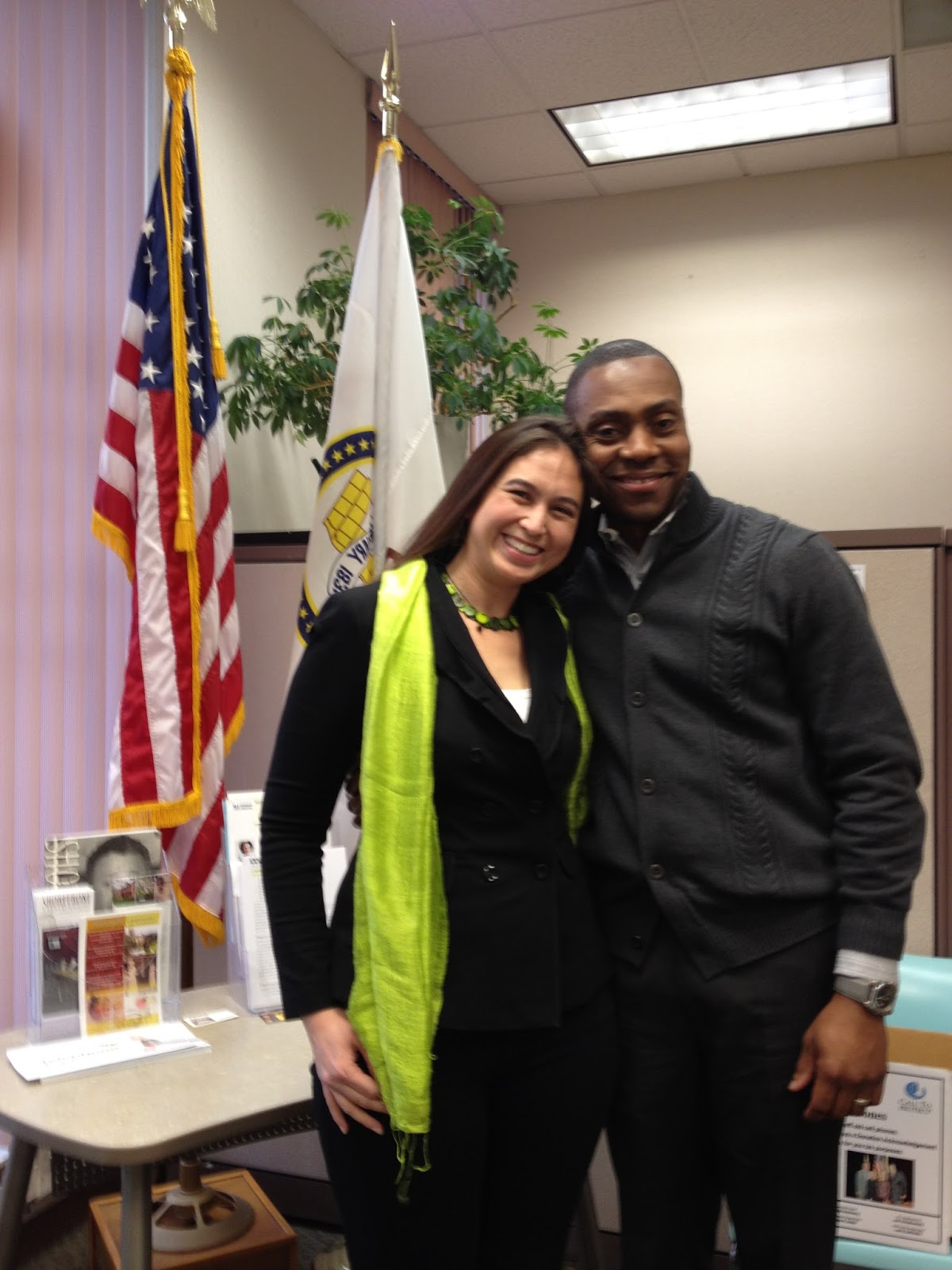
 |
| My last meeting with an aide I with whom I had lobbied for about 5 years. Then, I moved and he changed jobs. Miss you, Dave! |
At the same time, I sigh inwardly when novice activists demand our outrage because they walked into the local office (unannounced) and couldn't see their U.S. representative (who wasn't on the premises). In politics, there are lots of things to be outraged about, but if you want to increase your chances of changing an MOC's mind and gaining them as an ally, it's important to know what's realistic to expect from a congressional office.
When volunteer advocates first start out, we can get fired up with entitlement knowing Congress works for us and is paid by us. This is true. But it's also true that they have many demands on their time. Even with the most constituent-friendly representatives who like your issue, you probably won't get to meet with them more than twice a year, it generally takes several months to line up an in-person meeting, and it's easier to get a face-to-face meeting with them in Washington D.C...although it will usually only be about 15-20 minutes long. Senators are even harder to see.
I'd like share some basic truths I've seen about lobbying and life:
- Like when you seek out your professor, your member of Congress is not sitting at her desk simply waiting to talk to you without an appointment.
- Like when you take your kid to the orthodontist, if you show up 15 late to an appointment, you probably missed it entirely.
- Like when you take preschoolers to visit the firemen, your meeting might have to be delayed because of sudden, serious matters that you really do want him to attend and you may never get to know what that reason was.
- Like when you need to talk to the PTO mom you snubbed at the potluck, your request for a meeting is not going to be top of her list if you've shown her public disrespect.
Enter the person with a reasonable compromise: The Congressional Aide.
 |
| I'm only including this meeting pic with Senator Blunt's aide because President Truman's old office is so pretty and my daughter's photo bomb is so funny! |
An aide's job is to represent the senator or representative and hear your concerns when the boss is not available (which is most of the time). The role they play in your meeting will depend on their own years of experience in the office, their job description, and how much their boss trusts them.
 |
| Pro tip: Yams on the table make a welcome addition to any meeting about nutrition. |
What roles can aides play in your meeting?
They can be messengers: This is pretty much always the case. If they are taking a scheduled meeting with you, their job is to listen to your concerns and pass them on to the MOC with their recommendations.They can be issue experts: Most aides - especially in DC offices - have a particular job responsibility and therefore know more about issues that fall in that scope. I've known aides that have covered education issues their whole career and those that specialize in foreign affairs. Aides in the local district offices tend to be more "jacks of all trades" because the local offices are smaller, but I even know one local aide who is the point person for all her boss' activities in opposing sex trafficking within U.S. borders...that's pretty specific! Anyway, you want to make sure that you request to talk to the correct aide for your issue and be aware you might be talking to someone with deep knowledge of your topic.
They can be gatekeepers: They have quite a bit of influence with the scheduler in deciding who gets face time with the MOC or not. Sometimes this depends on your issue, but I really do think it has a lot to do with whether you present yourself as a rational human being or not. If you show up yelling curse words or wearing a chicken costume or something else meant to shame the office, you probably just blew your chance to have a productive back and forth conversation with your senator.
 |
| Building a relationship with Senator Durbin's aide (right) got Richard Smiley and I tickets to a Congressional Gold Medal ceremony for Muhammad Yunus because he knew our names & that we supported microcredit lending. |
They can be your champion: Here's a secret....aides don't always agree with their bosses on everything! I once worked for two years talking to a polite, but disinterested aide trying to get a certain Congressman to do anything at all on global poverty. Then, one day, that aide wasn't available and we ended up talking to his press secretary. I could've chosen to be offended and turn down the meeting, but I went in with my group and pitched our bill anyway. Turns out this aide was a young woman from a family who had adopted a family from Somalia. She showed us pictures of her Somalian siblings standing up at her wedding. She knew better than we did what the devastating affects of extreme poverty were to individuals. So, even though she wasn't the official issue expert, she presented our message to her boss and convinced him not only to sign the bill, but to publish an opinion piece in our local newspaper about it...one that I have no doubt that she wrote for him. And next time we asked for a face-to-face meeting? We got it.
 |
| Not only does this Chief of Staff have the authority make decisions in the Congresswoman's absence, she was willing to give my volunteers a tour of her super-full in-box & email to show why it's important we keep in touch with staffers regularly. |
They can be decision makers: Three times I have been surprised that I was sitting with aides who were actually empowered to grant my request WITHOUT consulting the member of Congress first. Holy cow. That's enough to make me treat everyone that way just in case! Aides who can do this are usually 1) Issue experts who know the MOC's position so well that they can anticipate which bills their boss will want to sign 2) Chiefs of Staff who take your meeting because they are interested in your issue or happen to be filling in for more junior aides for whatever reason.
They are ALWAYS human: They are always human beings worthy of your respect. Yes, they are paid by our taxes, but they're still people just doing their jobs. It is always worth taking the time to ask her what brought her to this line of work or ask how his day is going. They are often also constituents or former residents of your state, so it rarely takes very much small talk to find something you have in common. They are never deserving of unsolicited curse words and personal attacks. They don't have to be your best friend, but cultivating a friendly relationship with an aide might be the best thing you can do for your cause.
So, to recap...
What an aide can be:
Messenger, Issue expert, Gatekeeper, Your Champion, Decision Maker, Human
What an aide isn't:
Your Punching Bag
Do you have a story about how working with an aide created a positive outcome with you member of Congress?


