Showing posts with label activism. Show all posts

Friday, August 26, 2022

Activist Profile: Laura Frisch of Moms Demand Action


Image: Laura Frish (photo by Laura Frisch)

The following is an excerpt from my book, "From Changing Diapers to Changing the World: Why Moms Make Great Advocates and How to Get Started." In addition to stories and quotes from mom-advocates, my book features six mothers in particular whose stories highlight different aspects of advocacy. Laura Frisch, a volunteer for Moms Demand Action for Gun Sense in America, is one of those powerful women. In this section, I invite everyone to consider how to be more inclusive and build stronger communities.

PROFILE: LAURA FRISCH

BUILDING COMMUNITY

Although I have known Laura Frisch for more than fifteen years, I remain amazed at how she uses every opportunity to exponentially group efforts for good and to build up the community around her in positive ways. Frankly, I both admire and fear her abilities because she pushes the boundaries of my own comfort zone. Knowing Laura has made me a bolder organizer.

As a mom of young children, Laura skillfully created a fun and welcoming community for her friends and neighbors; she carried those skills into her local schools and later into troubled Chicago neighborhoods. Now she works to foster a nationwide community that can create a safer place for all. 

When we were both raising little ones in Morton Grove, Illinois, Laura’s house was a swirling epicenter of neighborhood activity. Two kids and four dogs made for a bustling home on the quietest of days, and her door was always open to welcome friends and their kids for anything from an impromptu backyard picnic to a messy tie-dye T-shirt session. 

To Laura, anything worth doing with two friends was worth doing with ten friends! She was so comfortable in the chaos that her first instinct was always to ask, “How can we include more people? How do we make this open and accessible for everyone?” This tendency was both a challenge and an inspiration to an introvert like me, who generally wanted to keep things comfortable and cozy for myself. Yet I knew that whenever I wanted to rally the Morton Grove community, Laura was the secret ingredient for cooking up any of my schemes. 

For example, I once thought it would be good to replace the school’s annual wrapping paper fundraiser with a walkathon so our kids could do something healthy instead of generating more disposable waste. I laid my idea at Laura’s feet. Before I knew it, we had a school day set aside for a walkathon and a volunteer committee of parents scurrying to find sponsors, collect donations, and judge a T-shirt design contest. 

Laura didn’t stop there. She arranged for a school for students with emotional or physical challenges to participate in our walkathon and to share in the proceeds, too. That school had significant financial needs but no parent organization to raise money. Laura took my idea and made it bigger. More inclusive. More accessible. I moved away from Illinois in 2013, but I kept in touch with Laura, and I wasn’t surprised when she became involved with a nationwide advocacy group in the aftermath of the 2012 Sandy Hook Elementary School shooting. Laura, who had been teaching a park district preschool class on the day of the shooting, said, “It was like Pearl Harbor Day. I distinctly remember I was working in one of those little one-room schoolhouses. No protection there. I thought about how I’ve had incidents where divorced parents tried to pick up kids without authority and I had to call the police.” In those times of conflict, it had only been Laura and two helpers caring for fifteen preschoolers. No security backup. 

The thought of what could happen if an armed person came with the intent to harm her or her class prompted her to join the Facebook group of Shannon Watts, an Indiana stay-at-home mom who felt compelled to take action after the Sandy Hook massacre. Shannon started a nationwide discussion among mothers about how Americans could and should do more to reduce gun violence. This impromptu group went viral and eventually became Moms Demand Action for Gun Sense in America. It’s now a widespread grassroots movement of Americans who are fighting for public safety measures to reduce gun violence. Members advocate for stronger gun laws and work to close loopholes that jeopardize public safety. They also work in their own communities and with business leaders to encourage a culture of responsible gun ownership. 

Image: Missouri Moms Demand Action advocates
at 2020 lobby day in Jefferson City, MO
Photo by Becky Morgan

Nowadays, Moms Demand Action is an advocacy juggernaut that inspires seas of supporters in read T-shirts to descend upon state legislatures to promote "gun sense" legislation. The organization has at least one chapter in every state and over eight million supporters. But Laura was there in the early days when Moms Demand Action consisted of small pockets of moms around the country who were simply trying to start conversations about gun safety.

“We were a total ragtag little team of people who started out saying, ‘Let’s talk about it at our PTO meetings’ and turned it into ‘Let’s find out how to lobby,’” she recalled. At the time, she had no idea how big the movement would become or that she would bring the Moms Demand organization to the whole North Shore area of Chicago. 

In addition to Laura, several Moms Demand members lived in Chicago or its suburbs, and one of them learned a mother had been killed while protecting her child from a drive-by shooting. So, a couple of nearby members went to sit in solidarity with neighbors on the Englewood corner where that mother had been shot. Laura believes it’s important to know that Moms Demand volunteers went with a spirit of partnership to places where allies were already working against gun violence, rather than simply showing up after a shooting for a photo op. “It’s more like, when there was a group there already, they’d say, ‘Come and help,’ and we’d show up to support each other.” 

In Englewood, what began as a small vigil on a corner started by Tamar Manasseh of MASK, Mothers and Men Against Senseless Killings, soon blossomed into a regular event the community could count on for safety. The gatherings went like this: Take char- coal and food for seventy-five people to a local park. Bring along a local Lutheran pastor, Islamic leaders, and Jewish congregants. Get together and talk to people in a block-party setting. Feed everyone. The atmosphere was energizing and loving. On these block party nights, kids in the neighborhood knew this would be a safe spot where they could get something to eat, which was important because many of the kids were food insecure. Laura would set up a face-painting table, something she often did for events at her synagogue and the Morton Grove Farmers’ Market. Her face painting gave kids a chance to sit down with a safe adult for one-on-one time, helping them build positive memories of being a kid. 

Moms Demand volunteers in Chicago continue to work with local groups organizing these kinds of gatherings to provide whatever is needed. They strive to make these areas feel safer and to help children escape the fear they carry with them. Members also listen to kids tell stories of the people they have lost. 

Laura’s role with Moms Demand Action grew as the organization addressed more state and national initiatives, including speaking to legislators and supporting a campaign to spread safety awareness among gun owners. But she still makes time to go back to that same Englewood gathering, which never stopped trying to make that corner a safe place to be. Even though MASK runs the event on its own, Laura still goes twice a year, bringing more people with her each time. 

“It’s hot and there’s very little shade,” Laura admitted. “It’s a schlep down there, but we go back every year. Every single time I’m thinking, ‘This is affecting people in a positive way,’ so I keep going.” 

When she reflected upon how the organization has expanded from the eclectic group of volunteers who gathered in the early days, Laura said, “Moms Demand was the sorority everyone could join. Of course, it’s serious business. Many people joined because they lost a child or loved one to gun violence, so it wasn’t all fun with sisters. But everyone was welcome.” 

Baking this kind of inclusiveness into the organization’s culture has helped it grow and gain power. With a problem as widespread as gun violence, it’s important to get all kinds of allies on board to create and run safety campaigns and encourage the election of gun-sense candidates. They may have started as a bunch of moms, but those moms knew they needed to enlist the help of dads, kids, hunters, gun-toting grandmas, members of Congress, and even conservative news pundits. 

Not long after my 2019 conversation with Laura, conservative CNN host S. E. Cupp—nationally known as an outspoken supporter of the National Rifle Association (NRA)—announced on air that she had dropped her NRA membership in the wake of mass shootings in El Paso, Texas, and Dayton, Ohio. In an impassioned speech, she spoke in favor of legislative measures that Moms Demand advocates had promoted for years: universal background checks, bans on the sale of large drums of ammunition, and measures to prevent domestic abusers from having access to guns. Just four years earlier, Cupp had appeared in an advertisement as a self-proclaimed “NRA mom” who urged others to join the NRA. I don’t know whether Cupp will join Moms Demand, but I think she would find that sorority accepting of her. 

Building movements and organizing volunteers is hard. It can be messy when a lot of different personalities and viewpoints clash. But changing the world takes a wide diversity of voices and personalities, and we don’t always get to pick and choose who shows up to help. Laura understands that if we work only with people who look like us, shop like us, worship like us, and play like us, then we are not going to change much of anything at all. Her solution is to welcome everybody. 

When I asked what drives her sense of inclusivity, Laura denied suggestions that it came from her religion or early role models. Instead, she said, “I was lonely as a kid. I’m never going to make someone not be included. I’ve stood in those shoes and I’m not going to make anyone else stand in them.” 

Most of us have felt lonely and left out at times in our lives. Let’s channel those feelings as Laura does to make others feel more comfortable as we work together. Building inclusive movements is the greatest gift we can share to take powerful actions and help more people. 


Image: Book cover

Buy an autographed copy of "From Changing Diapers to Changing the World: Why Moms Make Great Advocates and How to Get Started" at my website www.changyit.com or order it from Amazon, Barnes and Noble, or any independent bookstore!

Tuesday, June 7, 2022

Global Food Systems: Seed to Plate and Everything In-Between

Image: Cynthia with a copy of her book "From Changing
Diapers to Changing the World" at Capitol Hill in DC

Today, I’m back on Capitol Hill with CARE talking about...drumroll please...food security! Although I often lobby Congress about nutrition, usually I’m talking about child nutrition in the first 1000 days of life. That is definitely part of food security, but it’s just one tiny aspect of the great big issue.

Image: Toddler eating carrots off a plate

What is Food Security?

Food security is all about strengthening food systems to help the world weather all kinds of crises. Food systems encompass everything from seed to plate and ALL that happens in between. 

The main legislation that authorizes the U.S. to do its part in protecting global food systems is called the Global Food Security Act (GFSA). In 2016, it put our Feed the Future program - which addressed root causes of poverty, hunger, and malnutrition - into law. That successful program lifted approximately 23.4 million people above the poverty line with its innovations! Yet it will expire soon and must be renewed by 2023. 

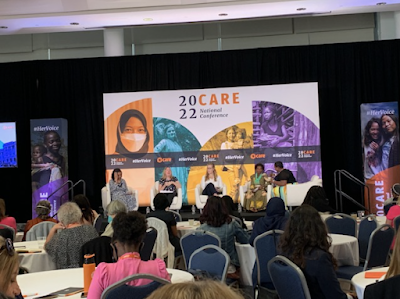
Image: Panelists at 2022 CARE conference talk about the 
importance of the Global Food Security Act

The Global Food Security Act focuses on long term sustainability and resilience of food systems. We have seen in the last two years how disruptions in food supply from disease or war can globally affect food access for the vulnerable and food price increases for everyone. Emergency food helps people eat now. Strengthening food systems helps build long term resilience for all kinds of future emergencies. 

Build a Better GFSA

We are at a real crisis point with food security. More people in the world were already food insecure even before COVID-19 and war in the Ukraine started. We need to build up food systems, so we won't be so vulnerable to these kinds of shocks as well as things we can't even yet imagine. 


How does CARE want to make the next Global Food Security Act even better? As always, we know that putting women and girls at the center will improve policies. CARE believes the next GFSA should include:

  • More support for savings groups that help women and girls involved in agriculture become more independent
  • More support for small-scale farmers, particularly women, giving them better access to markets, credits, tools, fertilizer, and other assets
  • Better integration of nutrition into food systems programming, including elevating women as household decision-makers on nutrition. 

How Can YOU Help? 

Call your representative this week and say, “My name is ______ and I’m your constituent living in _____. A new Global Food Security Action will be introduced soon by Representatives Betty McCollum and Chris Smith. I am asking you to be an original co-sponsor to support food systems and help make our world more resilient to disasters like disease, climate disasters, and war. Thank you.”

Image: Cynthia with Congresswoman Cori Bush


Friday, October 8, 2021

Get the Word Out: Letters to the Editor for Non-local Newspapers

Image: Cindy shouting into a megaphone

I know there are great media writers reading my blog who already have good relationships with their local newspapers. Fantastic! My local RESULTS St. Louis group got to that point a few years ago. We were very good at getting letters to the editor (LTE’s) published in newspapers around town. But we wondered, “How could we expand our media influence around our state?” In fact, a senate aide tole us they wanted to see us bring in media clips not only from our urban area, but from rural Missouri as well to show our influence in those areas.

I’ll share three tips we learned in case you’re looking to broaden your reach around your state and even into others. Getting published out of state is one of the few ways I can influence members of Congress out of my state. They may not have to represent me, but they definitely care what anyone says about them in the press!

If you’ve never written a letter to the editor before, pop over to my previous blog to check out basic tips for writing LTE’s. For a next step in generating more media, read on…

#1 Find a good headline from Associated Press News and submit several similar LTE’s at once

Editors love letters responding to articles in their own paper. Yet it can take time to look through many papers searching for a good headline “hook” related to your issue. The Associated Press can save you time!

Associated Press is a news service a lot of papers use, so they don’t have to use local resources to cover national news. If you find a headline that could be an excellent hook and the byline says Associated Press or “AP” on it, google that exact headline and it will probably turn up in several newspapers around the country. So, I can write one basic letter, then alter it a bit for each consecutive one until I respond to all of them, changing out the names of the members of Congress for the different publication areas. 

For instance, say you want to find an article about COVID-19 vaccines so you can write an LTE about global access. The AP put out an article called “Sweeping new vaccine mandates for 100 million Americans.” The same article was picked up in Denver, St Louis, Detroit, and Cedar Rapids among others. I can usually submit 6 or 7 letters using this method and maybe even get 2 or 3 of them published! Make sure each one is a slightly different, so they aren’t exact copies of each other.

Image: A headline with the Associated Press byline circled

Newspapers might change the headline a little, but they usually keep the first line of the article the same, so you could google the first line and possibly find even more.

#2 Try out-of-town newspapers in cities where you have a connection

For instance, my hometown newspaper in Fargo, North Dakota had a letter to the editor talking about the separation of church and state. I used that hook to say while the writer’s point was important, I also believe in being actively engaged in politics to live out the moral values I first learned as a child at Gethsemene Cathedral in Fargo. Mentioning my home church established my connection to their local community. I wrote about how people of many faiths support feeding malnourished people around the world and requested a global nutrition action from North Dakota senators.

Image: My Space Camper suited up
for a space walk simulation
For a paper in Oklahoma City, I might mention my mom lives there to reference a connection. I’ve also found newspapers amenable to printing your writing if you mention you travelled to the town for a beloved local attraction. When I took my daughter to Space Camp in Huntsville, AL and mentioned our trip in a piece while I stayed in town for a week, it was published immediately. 

#3 Respond to a colleague in the opinion section

This one works so well for me, it almost feels like cheating. If you know other activists who write LTE’s on the same issue, respond to their letters. I’ve lost track of the number of times my fellow RESULTS partner Willie Dickerson and I have landed published responses to each other’s letters, even though he lives in Washington State and I’m in Missouri. If I notice Willie has a letter in a newspaper far from where he actually lives, I automatically know they accept letters from out of town and that they would publish letters on our issues. So, I just write a letter to the editor saying I agree with him and mention a few more talking points about the same issue. This has the added benefit of going a little deeper into the issue than the original letter, so the members of Congress learn a little more.

Image: Willie Dickerson with my youngest daughter
Lastly, I’ll point out that some papers do not accept out-of-town letters at all. If you want a surefire list of papers around the country accepting of out-of-towners, I have a list of my published letters to the editor on my website. Any paper not in St. Louis is out-of-town for me, so they are fair game!

Let me know in the comment if any of these tips work for you or if you have some to add. Good luck!


Thursday, June 10, 2021

7 Tips for Networking at a Virtual Conference


A picture of my at-home workstation during
a virtual conference in a pandemic.

Virtual conferences have been a standard part of organizational life during the COVID-19 pandemic. Accessibility for folks who can't travel was such a positive outcome for advocacy groups that I predict we’ll see them continue to offer virtual components to conferences even when we can gather again. So many new activists were able to participate! On the other hand, it’s been difficult to recreate networking opportunities through our computer screens.

My first virtual conference felt rather unsatisfying. Sure, I learned new information by watching speakers, but I longed for the relationship-building part of an in-person conference. I didn’t feel like I met many new people and resolved to do better with each successive conference.


Since then, I’ve learned a few ways to make the most of networking during a virtual conference. Every conference is different depending on which platforms they choose and how they choose to use them. But they usually contain some common features - like zoom meetups, pre-conference chat discussions, and Q&A opportunities - that can raise your visibility and help you get to know people. 

RESULTS uses the Whova platform to host the conference event, info,
and community discussions. This is a screen capture of the agenda window.

My main piece of advice is: get in there and participate! But how? Here are my seven tips for making the most of a virtual conference:

1. Be Positive

Humans gravitate to people who are positive and encouraging. I believe this is especially true in when virtually interacting with a group of strangers. You might possess a razor-sharp, wry wit in face-to-face encounters yet that never seems to come through well in typed comments. I’ve seen things go awry when someone takes it upon themselves to criticize someone else’s answer to a getting-to-know-you ice breaker question. I mean…what the heck? If their preference isn’t racist or hurtful, don’t “yuck their yum” (as the head of my kids’ school would say).

I have another reason for staying positive...my kids attend RESULTS conferences with me online. As a mom, I wouldn't want to write anything out on those apps that I'd be embarrassed for my kids to read! So, assume the best intentions of people, lay off the all-caps key, and remember that it’s even easier to walk away from an irritating situation on a computer than it is in real life.

2. Ask Insightful Questions

A picture of me raising my hand.

I’ve been in conferences where participants were shy to ask the first question. It made for many awkward pauses in Q&A sections. Now, I try to come up with at least one question before the session even starts. A thoughtful question can help get the ball rolling (great for everyone) and make a good impression on others (great for your networking).

To inspire ideas for questions, read session descriptions beforehand and maybe even google the speakers. Keep your question concise and on topic. Pay attention during the session to make sure you won’t ask about something that was already covered. Most of the time, virtual conferences just have folks write questions in a chat box, but if you get to turn your microphone or camera, be sure to say your name and your city before your question.

3. Be Helpful


A friendly, helpful attitude is a way to attract positive attention from attendees and organizers alike. For instance, I attended a writing conference where everyone first joined a main room while all session content was in several breakout rooms with different names. People could step out and interact in the main room anytime, but there were often clueless participants in there trying to find their way around, too. I was one of the clueless people at first! To help others costs nothing and creates a lot of goodwill.

4. Expand Your Social Media Network

Logos of Facebook, Twitter,
and LinkedIn
We can’t hand anyone a physical business card, but virtual conferences have the advantage of displaying names of participants. Some use large zoom rooms where you can see names underneath pictures. Some conferences use apps that list all the participants with profiles, so you can see if you share similar professional or social interests. Take advantage of the ability to see names by connecting with them on social media platforms like LinkedIn, Twitter, Facebook, or Instagram. That way you can continue your conversations well after the conference is over.

5. Stay On Topic

When overzealous participants fill the conference apps with off topic links or comments, it can be super annoying. It can also push relevant posts so far down that others can’t find information they want. If the conference app lets you share articles, make sure you share links to pieces related to the focus of the conference. Some people try to connect with others by sharing different interests, but sharing too many unrelated posts and articles can have the opposite effect by irritating fellow participants.

6. Try Out New Technology

My teens love to tease me about how I don’t like to download new apps to my phone or computer. I’m turning into an old curmudgeonly lady who doesn’t like to learn how to use new-fangled things. But if you don’t commit to learning to use each conference platform to the fullest, you’re excluding yourself from networking opportunities!

CARE held a virtual 75th Anniversary event with that used “proximity voice chat” to create a cocktail party experience. (Anyone who plays Among Us is familiar with that tech) We uploaded pictures of ourselves, so we could move our avatars around the screen. If you moved closer to another group of avatars, you could converse with them. If you moved farther away, you couldn’t hear them anymore, much like an actual party. There was also a screen in the virtual room that had some content playing. I could have just parked myself by the movie screen and simply watched the recorded content since I was clumsy at using the unfamiliar platform. Instead, I made myself use it and connected with old and new friends in a way that was really engaging!

7. Make Space for Others

Yes, networking requires you to be visible and active, but take care not to dominate the conversation. For instance, if you share so many articles and links in the conference app that it pushes other people's suggestions right off of the visible list, you've essentially cut them out of the conversation even if you mean well. (I've made that mistake before) 

You can participate in a way that helps others be comfortable in sharing their thoughts. I believe the best kinds of interactions are ones where you create room for others to shine, too! Pre-conference chats are not quiz shows where you need to be first with the best answer.

By the way, this is especially important advice for white folks. Virtual conferences have not removed the habits of white privilege. I try to promote myself in a way that demonstrates an ability to be kind, humble, and sensitive to others.

What are YOUR tips for networking at virtual conferences?

Wednesday, April 21, 2021

Snow Days for Advocates?

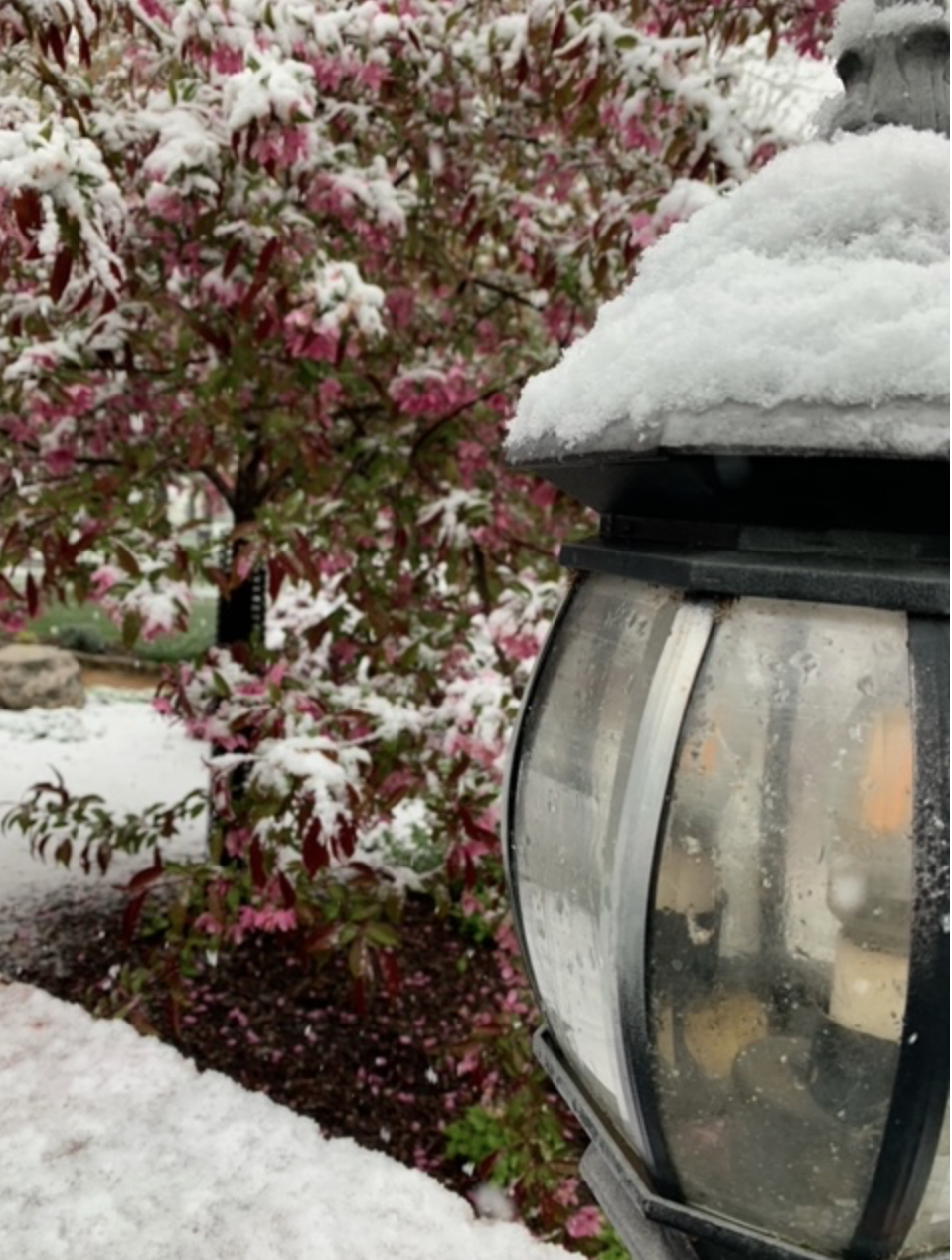
Snow covering a lantern and a tree with pink blossoms.

Yesterday afternoon, my activist daughter and I talked about the triple-guilty verdict in the Minneapolis trial of Derek Chauvin yesterday. I was in a mental place of expressing relief for a verdict my cynical heart had predicted to go the other way. She was in a place of continuing the fight for justice. She asked me (this is my paraphrasing of her question), “What difference does this verdict make in our actions? There is still so much to do.”

She’s right. We still live in a broken system overshadowed by oppression and white supremacy. But I tried to describe how on-the-edge this has felt for mom-friends with Black children. It’s hard for me to explain it when I can’t experience the depth of their anxiety myself. But I do know a thing or two about the draining long-term effects of activism.

Snow Days for Advocates

Snow upon pink spring blossoms.

It hurts to advocate for years and years on a thing that never really seems to change whether you're working on climate, tuberculosis, or gun violence. It’s even worse for my friends who feel real and active fear when their Black children are quickly growing into Black teens. I tried to make a comparison that a major trial verdict like this is like a Snow Day for advocates. Remember that feeling when you have a ton of schoolwork, but then you wake up one morning to heavy snow blanketing the ground? When you hear that school cancellation announcement, you KNOW you’re still responsible for all the work. But for a few hours, you can lay aside your burden and not fight that particular fight.


Snow on a blossoming tree against a
pine tree in the background.

A Killing Frost

As I said those words, a rare St. Louis April snow fell amidst our spring blossoms. The Snow Day seemed like a suitable metaphor. Then, tweets started coming in from Ohio about the police shooting of 15-year-old Ma’Khia Bryant. They reminded me we weren’t even a week away from the killing of Daunte Wright by a police officer at a traffic stop in Minneapolis. It changed the way I looked at the snow on the flowers. Suddenly, it seemed more like a killing chill threatening the beauty of progress in the season.

I sat watching the quiet, falling flakes. The hopeful thought entered my mind that the snow might indeed kill those blossoms, but it won’t kill the trees. Their roots, like the grass on the lawn, run deep. There’s a reason we call activism from regular folks “grassroots advocacy.” You can mow the grass down or you can freeze the blades. But if the roots are deep and healthy, grass will come back again and again. Some movements are young and fragile, like the young pea shoots in my backyard garden. We must nurture and protect them, so they can later withstand the coming heat of summer. (I covered the peas up with tarps in the morning before the snow)

We’re Both Right

Today, I’m more of my daughter’s mindset. I think of end of the Thurgood Marshall biopic, “Marshall,” where he didn’t even stick around in town to hear the verdict of the big case because he was already in another town with another trial. We must keep moving ahead as a country. Yesterday, however, I needed to lean into the relief I felt. Especially as we get older and see more wins and losses, we need to learn to stop and take a pause when we see accountability or progress. It strengthens us in our long journey toward justice.

Snow on purple flowers.

Tuesday, March 21, 2017

Strategic Acts of Kindness

Last week was “Random Acts of Kindness Week,” a time to encourage people to make life more pleasant for everyone. Organizers at randomactsofkindness.org encouraged actions like leaving positive notes around town and feeding meters for strangers. I would never argue with that notion. The world needs more kindness! But now that the week for random acts is over, I think it’s time to also embrace “strategic acts of kindness.”

Random acts of hatred have risen dramatically in the United States. Our country has seen repeated damage to Jewish cemeteries and bomb threats to Jewish community centers. The highest office of the U.S. has issued unconstitutional travel bans targeting Muslims. People of all kinds of skin tones other than the old Crayola crayon "flesh" color are shouted at to "Go home!" when they've lived in the U.S. their whole lives. Racism, sexism, and xenophobia are becoming increasingly normalized in political discussions and in everyday conversations. 


In the face of such a disturbing reality, we must take powerful actions to protect those who suffer disproportionately in this world because of religion, race, gender, or any number of factors. People of every political stripe are waking up and wanting to have a voice in the direction our country is heading. However, many regular folks don’t have the first idea about how to reach our nation’s decision makers.

That’s where strategic acts of kindness come in. In my former career as an engineer, I found random actions led to random results. Intentional strategy is needed to combat random acts of hatred or – even worse – systematic acts of oppression in our country and around the world.

Bread for the World volunteers handwrite letters to Congress
at church after a Sunday worship service.
What could this sort of organized love look like? Setting aside time each day to call members of Congress to voice your opinion. Holding a meeting with friends to write letters to elected officials. Submitting a letter to the editor. Sitting down with a senator or representative face to face to voice your opinion with respect. In fact, these are the very actions that U.S. representatives and senators consistently report as the most influential ways a constituent can sway their opinion.


If you don’t know how to do these things right now, that’s not a problem. Before I learned how to raise my voice, I was a stay-at-home mom who didn’t even know the names of my senators. I only knew that my community and my world allowed babies in poverty to suffer from poor health and I wanted to help. By getting involved with reputable advocacy organizations like RESULTS, I was able to receive training, support, and inspiration to become a skilled advocate. In time, I learned to effectively advise policy makers, guiding them towards decisions that improve access to education, health, and economic opportunity.

Richard Smiley and I meet with Senator Durbin about
microfinance to help the poorest families of the world.
What could we accomplish together if we could channel outrage and dissent into deliberate actions to change the future in positive ways? The possibilities are endless. Look at the massive problem of global poverty, widely regarded as unsolvable. Years of coordinated volunteer advocacy have pressured the U.S. to partner with other countries on global health, nutrition, and education programs. Since 1990, the number of people living in extreme poverty worldwide has been cut by more than half! With enough engaged citizens creating the political will to stand up for ourselves and people in need, there is no limit to the good we could do.

It is critical that we empower ourselves with the skills needed to speak out to the presidential administration and our members of Congress. Compassionate civic engagement is what our situation demands of us today. Together, we can navigate the combative ugliness of our time by rising above it. It’s time to move beyond the random. We can shape the future by committing to strategic acts of kindness.


Tuesday, February 28, 2017

Never Turn Down A Meeting With An Aide


My last meeting with an aide I with whom I had
lobbied for about 5 years. Then, I moved
and he changed jobs. Miss you, Dave!
There has been a lot of fuss lately over the inability of constituents to get face time with federal members of Congress (let's call them MOC's for short) and irritation at being passed off to talk to aides. As a long-time activist, I understand this frustration. When We the People have something to say about abuses of justice and rights, we want to see the person in charge...and we want to see him or her RIGHT NOW. We're Americans. It's what we do. 

At the same time, I sigh inwardly when novice activists demand our outrage because they walked into the local office (unannounced) and couldn't see their U.S. representative (who wasn't on the premises). In politics, there are lots of things to be outraged about, but if you want to increase your chances of changing an MOC's mind and gaining them as an ally, it's important to know what's realistic to expect from a congressional office.

When volunteer advocates first start out, we can get fired up with entitlement knowing Congress works for us and is paid by us. This is true. But it's also true that they have many demands on their time. Even with the most constituent-friendly representatives who like your issue, you probably won't get to meet with them more than twice a year, it generally takes several months to line up an in-person meeting, and it's easier to get a face-to-face meeting with them in Washington D.C...although it will usually only be about 15-20 minutes long. Senators are even harder to see.

I'd like share some basic truths I've seen about lobbying and life:
  • Like when you seek out your professor, your member of Congress is not sitting at her desk simply waiting to talk to you without an appointment.
  • Like when you take your kid to the orthodontist, if you show up 15 late to an appointment, you probably missed it entirely. 
  • Like when you take preschoolers to visit the firemen, your meeting might have to be delayed because of sudden, serious matters that you really do want him to attend and you may never get to know what that reason was.
  • Like when you need to talk to the PTO mom you snubbed at the potluck, your request for a meeting is not going to be top of her list if you've shown her public disrespect.
So, if there are understandable, human reasons that your member of Congress can't see you quickly, how can we still have our voices heard?

Enter the person with a reasonable compromise: The Congressional Aide.


I'm only including this meeting pic with Senator Blunt's aide
because President Truman's old office is so pretty and
my daughter's photo bomb is so funny!
NEVER turn down a meeting with an aide. Even though you might have the impression that they are just an "assistant," they can actually have more sway over your issues than most people think. I've now met more aides than I can count or even remember names for. Some have been joys to work with...others, less so. But I have found all of them - Republicans and Democrats - to be respectful, professional, and courteous when we offered them respect, professionalism, and courtesy ourselves.

An aide's job is to represent the senator or representative and hear your concerns when the boss is not available (which is most of the time). The role they play in your meeting will depend on their own years of experience in the office, their job description, and how much their boss trusts them. 
Pro tip: Yams on the table make a welcome addition to any
meeting about nutrition. 

What roles can aides play in your meeting?

They can be messengers: This is pretty much always the case. If they are taking a scheduled meeting with you, their job is to listen to your concerns and pass them on to the MOC with their recommendations. 

They can be issue experts: Most aides - especially in DC offices - have a particular job responsibility and therefore know more about issues that fall in that scope. I've known aides that have covered education issues their whole career and those that specialize in foreign affairs. Aides in the local district offices tend to be more "jacks of all trades" because the local offices are smaller, but I even know one local aide who is the point person for all her boss' activities in opposing sex trafficking within U.S. borders...that's pretty specific! Anyway, you want to make sure that you request to talk to the correct aide for your issue and be aware you might be talking to someone with deep knowledge of your topic.

They can be gatekeepers: They have quite a bit of influence with the scheduler in deciding who gets face time with the MOC or not. Sometimes this depends on your issue, but I really do think it has a lot to do with whether you present yourself as a rational human being or not. If you show up yelling curse words or wearing a chicken costume or something else meant to shame the office, you probably just blew your chance to have a productive back and forth conversation with your senator.
Building a relationship with Senator Durbin's aide (right) got
Richard Smiley and I tickets to a Congressional Gold Medal
ceremony for Muhammad Yunus because he knew our names
& that we supported microcredit lending.

They can be your champion: Here's a secret....aides don't always agree with their bosses on everything! I once worked for two years talking to a polite, but disinterested aide trying to get a certain Congressman to do anything at all on global poverty. Then, one day, that aide wasn't available and we ended up talking to his press secretary. I could've chosen to be offended and turn down the meeting, but I went in with my group and pitched our bill anyway. Turns out this aide was a young woman from a family who had adopted a family from Somalia. She showed us pictures of her Somalian siblings standing up at her wedding. She knew better than we did what the devastating affects of extreme poverty were to individuals. So, even though she wasn't the official issue expert, she presented our message to her boss and convinced him not only to sign the bill, but to publish an opinion piece in our local newspaper about it...one that I have no doubt that she wrote for him. And next time we asked for a face-to-face meeting? We got it.

Not only does this Chief of Staff have the authority
make decisions in the Congresswoman's absence, she
was willing to give my volunteers a tour of her super-full 
in-box & email to show why it's important we 
keep in touch with staffers regularly. 

They can be decision makers: Three times I have been surprised that I was sitting with aides who were actually empowered to grant my request WITHOUT consulting the member of Congress first. Holy cow. That's enough to make me treat everyone that way just in case! Aides who can do this are usually 1) Issue experts who know the MOC's position so well that they can anticipate which bills their boss will want to sign 2) Chiefs of Staff who take your meeting because they are interested in your issue or happen to be filling in for more junior aides for whatever reason.


They are ALWAYS human: They are always human beings worthy of your respect. Yes, they are paid by our taxes, but they're still people just doing their jobs. It is always worth taking the time to ask her what brought her to this line of work or ask how his day is going. They are often also constituents or former residents of your state, so it rarely takes very much small talk to find something you have in common. They are never deserving of unsolicited curse words and personal attacks. They don't have to be your best friend, but cultivating a friendly relationship with an aide might be the best thing you can do for your cause.

So, to recap...
What an aide can be: 
Messenger, Issue expert, Gatekeeper, Your Champion, Decision Maker, Human

What an aide isn't: 
Your Punching Bag


Do you have a story about how working with an aide created a positive outcome with you member of Congress?