Monday, June 29, 2020

Advocacy Made Easy: Protests


2017 March for Science in Washington D.C.
When a big moment comes around, protests can be a powerful way for a local community to weigh in together or for individuals to congregate in a high-profile destination like Washington D.C. I’ll be the first to admit that protests are not the form of advocacy I have the most experience doing. Most people know that my focus is on relationship-building lobby meetings on the opposite side of the spectrum from shouting in the streets. There are times, however, when many voices need to be heard all at once.

As parents, we need to decide when it is appropriate to involve our children in protest activities. We must recognize that these experiences are not set up to be learning exercises for our children. Large crowds, uncomfortable temperatures, and heightened emotions provide challenging situations for both adults and children. Yet depending upon the issue, it can be just too important for us to stay away. Jennifer Burden of New Jersey shared this sentiment with TAPinto.net about her decision to attend a Black Lives Matter protest with her husband and two daughters:
“The movement to end racism is a social justice issue that my family finds important and wants to be a part of. The Black Lives Matter rally, here, in our town of Holmdel, was a great conduit to further our conversations with our kids on the topic of race, and it provided an opportunity, as parents, to model the positive behavior for them on standing up for those who need it most.”
I want to make a clear statement that protesting is not the same as rioting. The right to protest is a protected right and a patriotic tradition in the United States. While it's true that some protest activities can lead to violence and property damage, rioting is not what I’m talking about.

A pre-coronavirus picture on the way to the
Women's March in January of 2020.
That being said, we must consider safety concerns because feelings can run hot at protests. Some issues have more potential for violence. Protests against gun violence sometimes draw out armed counter-protesters. Marches against police violence have higher tensions between police and protestors. Unlike other advocacy actions, protesting has a possibility for tear gas, gun violence, or other physical harm. Your choice of which protest to attend is paramount when considering the safety of children. Types of protest events can range from rallies and vigils that stay in one place or marches on the move. Is it better for your family to be in a march where you can duck easily out of the route or at a rally where small kids can sit on a blanket far from the center of action? You decide what is best for your particular family! I recommend choosing an environment that allows you to be the most present to your children and provide the best likely chances for peaceful gatherings.

Before a protest:
·      Look for a protest during daylight hours for better visibility, greater probability of peaceful action, and less grumpy children;
·      Choose a protest location allowing you to leave early without trouble if your child is tired or needs to use a bathroom;
·      Talk to children about the event days ahead of time to help them understand the issue and have time to ask questions;
·      Help kids make their own signs. (Thinking about what they want on their signs and how they want to express it can be part of their learning experience);
·      Discuss the tone of the march. (The March for Science had a serious message about climate change and other science-based issues, but a light-hearted attitude. Black Lives Matter (BLM) protests have an urgent air of life-and-death, and older kids should behave knowing they're standing in solidarity with survivors of traumatic experiences.);

Here are some tips for taking kids to protest events compiled from my experiences and suggestions from my friends who are more experienced parent-protesters.

For everyone:
·      Pack water and snacks;
·      Prepare for the weather. (Hats and sunscreen in the summer, ponchos for rain, or warm gloves and other outerwear for early spring and winter);
·      Wear good, comfortable shoes;
·      Stay close to each other;
·      Bring a bandana for each person (Useful for wiping a sweaty face with cool water or protecting from tear gas);

For young children:
·      Dress kids in clothes with pockets and make sure important info is in the pockets. (Very important info like allergies and phone numbers could even be written on arms or on a key chain safety-pinned to kid’s clothes);
·      Bring a light-weight sign for every 2-3 marchers to take turns when little ones tire of carrying it;
·      Attend with another family with your kids’ friends for fewer complaints of boredom;
·      Snacks, snacks, snacks;

For older kids:
·      Agree to rules before you arrive. (For instance, “don’t go into the thick of the crowd.” Or, “be respectful and positive.”);
·      Charge all cell phones & conserve battery for communication with each other;
·      Carry ID;
·      Wear glasses instead of contacts in case of tear gas;
·      Have a designated meeting space a few blocks from the protest in case you get separated;
·      Choose a spot where you can hear the speeches, if possible, so your kids can learn;
·      Discuss how to behave if yelled at, harassed, threatened, or arrested OR if you see it happen to someone else;
·      For sensitive human rights issues like Black Lives Matter, discuss what it means to be a good ally. (For instance, counsel white kids to follow Black leadership and not start chants on their own. Also, taking and posting smiling selfies at next to people in pain is in poor taste no matter how many people are doing it around you.);
·      For sensitive issues, do not post pictures of local organizers & other protesters on social media which might lead them to be targeted by extremists. (This happens here in St. Louis, sometimes with fatal consequences);

If the last three points are alarming, that is exactly why we have to give serious consideration to safety. Not all marches are simply a walk in the park. I'll say it again: We must recognize that these experiences are not set up to be learning exercises for our children.

My teens and I practiced safe mask-wearing and social
distancing at a Black Lives Matter protest during
the COVID-19 pandemic
COVID-19 Safety
·      Wear face masks at all times. Consider not taking children under two years of age because the CDC does not recommend masks for toddlers under that age;
·      Maintain a distance of at least six feet from everyone not in your family even if it means you can’t hear the speeches as well;
·      Bring hand sanitizer and use it liberally;
·      If people aren't using masks...leave;
·      Isolate for two weeks after to ensure you don't spread the virus if you do contract it;

Note: When COVID-19 safety protocol is followed, protests are being shown to be low-risk activities. Note that low-risk isn't NO risk. Stay home if you or your children are at high-risk for the virus.


What other suggestions can you share in the comment section?

Image: Book cover

Buy an autographed copy of "From Changing Diapers to Changing the World: Why Moms Make Great Advocates and How to Get Started" at my website www.changyit.com or order it from Amazon, Barnes and Noble, or any independent bookstore!

Friday, June 5, 2020

No Excuses, No Shame. Start Being an Ally Today.

I haven't posted about the massive Black Lives Matter movement sweeping across my country before now. That was on purpose. See, while I don't exactly identify as white (I'm mixed race white/Asian), I  know I am white in the context of this movement. So, I've been doing what Black leaders have asked of us. I've been watching, reading, learning, and - when I can - acting in a support role to help black-led activities. What I haven't done is written about how to take action against racism in America. This changes today.

I admit I've had a tendency to think I should let others who regularly work in the anti-racism area do the talking. I don't feel as educated or eloquent on race issues as I am about nutrition or housing.
I was thinking, "It's not my area"..but it is.
Centuries of unaddressed structural and systemic racism are the same forces of oppression that drive poverty in America and other countries. Racism and poverty are inextricably linked. So, I should do the same thing I always do: help get people into action by removing mental barriers that keep people from acting. Please know that I'm writing to fellow white people in this post from here on in.

Set aside shame

Here, I'm talking directly to white people with eyes newly opened to the realities of how Black Americans have suffered at the hands of our own law enforcement. Maybe you think things like, "I just didn't know" or "I had no idea it was that bad." Then, maybe you get embarrassed to realize that Black communities have been telling us for years and we just didn't listen. That embarrassment and shame can keep us from having the confidence to enter the movement. So, I'm telling you now...

Get over it.

Wallowing in the past doesn't make anything better. This is a case of "Do the best you can and when you know better, do better." You're here now. Let's get to work. If you move forward with a humble heart of service and an attitude of wanting to learn, you will help to make change.

The opposite of racist isn't "not racist." It's "anti-racist." It's not enough to sit back and say, "Well, I didn't do anything racist to anyone." Being silent and maintaining the status quo is keeping systemic racism in place. We have to get over ourselves and actually take actions to oppose racist policies whether it be educating others, protesting, promoting fairer policies about community policing and housing, or electing people who will enact those policies.

Do your homework

We can jumpstart ourselves into the "knowing better" part by doing a bit of homework before unintentionally doing or saying things that will hurt others. Robin DiAngelo, author of "White Fragility: Why It's So Hard For White People To Talk About Racism," states that white progressives cause the most daily damage to people of color. Find out what she means by that before you go out and do damage yourself.

Anti-racism work is hard. It's charged with feelings. Chances are that when you engage in it for the first, second, or third time, you'll probably stick your foot in your mouth and hurt others' feelings without meaning to. It's likely your own feelings will get hurt, too. But you can lessen those missteps by doing some upfront homework yourself.

And do your homework WITHOUT asking your Black friends for help. Laura Cathcart Robins, a Black podcaster and free-lance writer says, "Don't call or text me and ask me what to read or how to support me. I don't mean to be rude, but I'm exhausted and depleted; I'm put-a-fork-in-me-done with all that - please figure it out among yourselves."

There have never been more resources available about anti-oppression and racism. Books on the subject are in such demand that they're back-ordered at most bookstores. But I've heard many places are making them available for FREE on kindle and audiobooks. "White Fragility," "Me and White Supremacy," and "How to Be an Anti-Racist" are a few good titles to start with.

There are also no shortage of online articles to read online. Here are a few I recommend:

Black Lives Matter has also put this very long list together. It's pretty comprehensive and I have not read most of them! https://blacklivesmatters.carrd.co/#educate

But don't take too long doing the reading! "Antiracism is about doing and not just knowing," says Leslie Mac, an activist and a community organizer. Do your reading and keep doing it. Learning is a lifetime activity.

Do something...right now!

If you've been frozen thinking, "I don't know how to help," let's get over that hurdle. It might seem like the only way to help is by attending a protest, but that isn't true. Black Lives Matter has put out a list of literally hundreds of ways to help: https://blacklivesmatters.carrd.co

Of course, if you want to attend a protest, you certainly should! (remember to wear a face-mask and stand away from people to not spread the COVID-19 virus) Yet in the interest of overcoming barriers for people who can't or won't protest for whatever reason (and COVID-19 is definitely a reason), here is an incomplete list of other things you can do. There are so many ways to plug into the movement, that there are no more excuses to sit on the sidelines doing nothing.

  • Donate to a bail fund to release peaceful, organized protestors from jail
  • Donate to a victim's family
  • Work to elect local and federal candidates who stand for anti-racist policies by donating, phone-banking, or dropping off literature at doors.
  • Host a zoom book discussion about racism to educate your white friends
  • Call and write to your U.S. Senators. We can ask our U.S. Senators to sign onto the Justice in Policing Act of 2020 introduced by Senators Harris and Booker. The bill would ban the use of choke holds, establish a federal registry of misconduct complaints, make it easier for victims of police violence to recover damages by restricting the "qualified immunity" defense, collect data on use of force, and give the Justice Department more authority to investigate abuses by police departments. 
  •  Call and write to your U.S. Representatives. We can ask them to sign onto H.R. 7120: Justice in Policing Act of 2020 and the  H.R. 5777: Police Accountability Act of 2020. 
  • Sign online petitions
  • Back up your friends with supportive comments when you see them having tough conversations with friends/family about racism on Facebook
  • Join an advocacy group like RESULTS that has a clear anti-oppression mission. Learn to advocate for policies that will disrupt systemic racism (they just so happen to have an online conference this month!)
  • Write a blog post
  • Collect supplies to help keep protesters safe from COVID-19 and tear gas (You must coordinate with protest organizers to get them where they are needed. Joining a Black Lives Matter support Facebook group for your city is a good way to find them)
One last word about taking action..don't be a performance activist. If you go to a protest, document the action, but don't be posting selfies. Be present and helpful. You should share actions when they make sense and you are inviting others to join you, but you don't have to post screen shots of your donations. Just do the work humbly and follow the directives of Black leaders with grace and humility. This is what is required of us right now. 

Good luck on your journey. I'm gonna need it with mine!


Wednesday, May 6, 2020

Guest Blog: Lobbying on Zoom with UNICEF by Yara Changyit-Levin

Today's guest blogger is a very close colleague of mine: Yara Changyit-Levin. She is a high-school activist who writes the blog Thrill Seeking for Nerds (who want to change the world) and advocates about global health, climate issues, gun violence, and U.S. poverty. I admire how she trains other activists over Zoom and other digital platforms during isolation. I'm also pretty biased about her accomplishments because she's my daughter!

Our local senate office reached out to Yara recently to set up a lobby meeting via Zoom. So many good relationship building things happened in that meeting that I wanted her to share it with you. Perhaps you can pick up a few tips from this high-school UNICEF group? Their experience shows us how human the senate staffers are as they grow and learn new ways of communicating with constituents during this age of COVID-19.

If you'd like to support Yara and her UNICEF team members, please call your senate office and say, "My name is ____ and my zip-code is _____. Please ask the senator to sign Senate Resolution 511 to support Gavi, the Vaccine Alliance, to make sure children around the world have access to immunizations for measles, polio, and - eventually - COVID-19. Thank you."

Take it away, Yara...

--------------------------------------------------------------------

“You know, you’re the first meeting we’ve had that isn’t about COVID.”

I heard this from Senator Josh Hawley's aide in a virtual lobby meeting last week with my school’s UNICEF Club.

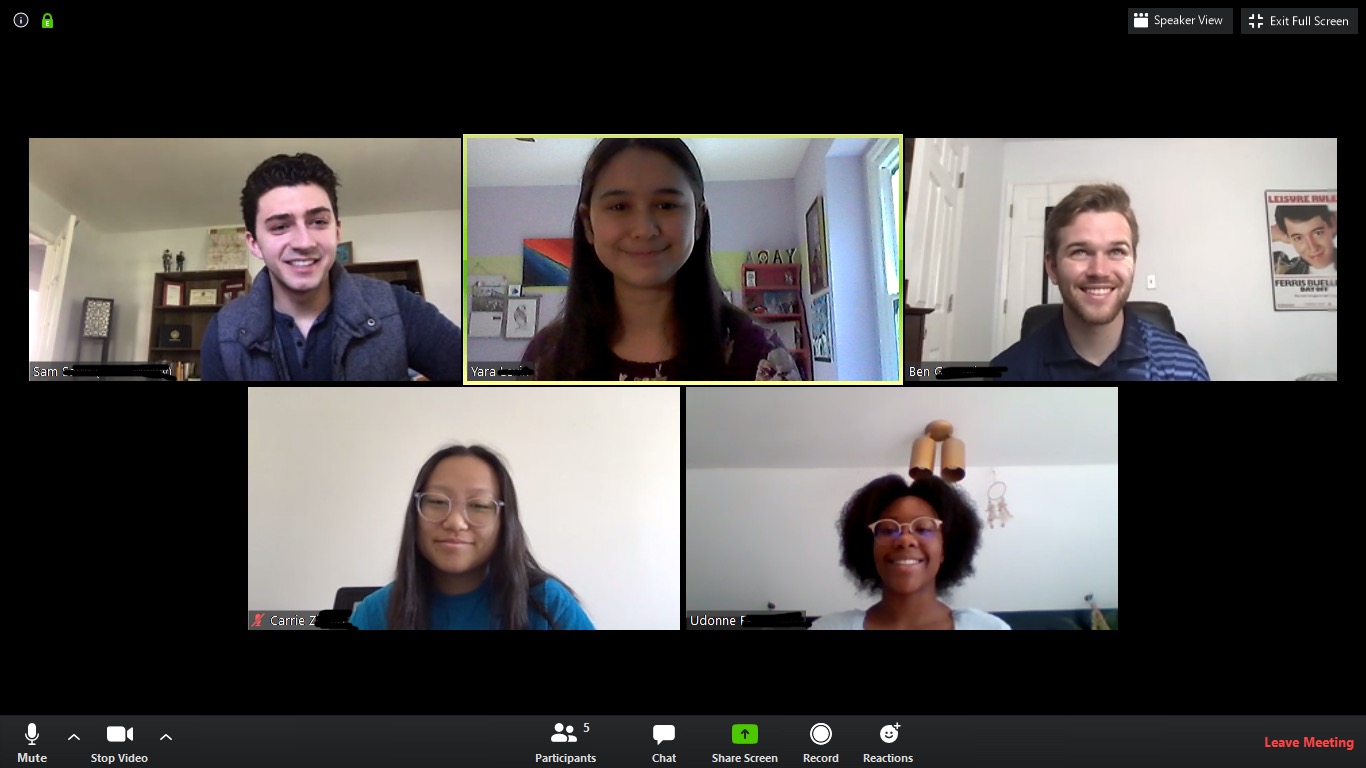
Yara (top center) facilitates the meeting with Senator Hawley's aides (top left and right)
and her fellow UNICEF Club members.

Many people are already familiar with UNICEF, the United Nations International Children’s Emergency Fund, which does exactly what the name implies. UNICEF has many different programs to put children first, including providing health care, education, emergency relief, and more in over 190 countries and territories.


So, what does a high school UNICEF Club do? We hold bake sales and other fundraisers for UNICEF, hold meetings, and we even make announcements at daily school assemblies when there’s a current event that affects children around the world, such as earthquakes in Puerto Rico or, most recently, the spread of COVID-19.


As Anti-Poverty Mom’s daughter, I was already familiar with UNICEF (having lobbied for funding and participated in trick-or-treat for UNICEF), so I was really excited to see this club at my school.


This school year, I became one of the club’s co-leaders and took on the role of Advocacy Lead, which has been very exciting! As a club, we’re doing more advocacy along the lines of RESULTS or Shot@Life, including our Valentine’s Day letter-writing to Congress. Before spring break, I hoped to hand-deliver our letters to a Senator’s local office and have our first lobby meeting as a club, so I submitted an official meeting request.


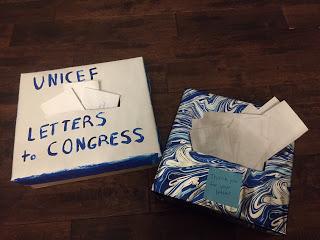
Letter boxes collected constituent letters at school and
at an at-home letter writing event before
COVID-19 isolation started.
Needless to say, COVID disrupted those plans. I wasn’t surprised when I didn’t hear back about that meeting. It just wasn’t going to happen.
But after four weeks, I got an email back! Not one, but two local aides were available to have a virtual meeting with us and get to know our UNICEF Club. I had a quick prep session with one of my co-leaders, who was lobbying for the first time.

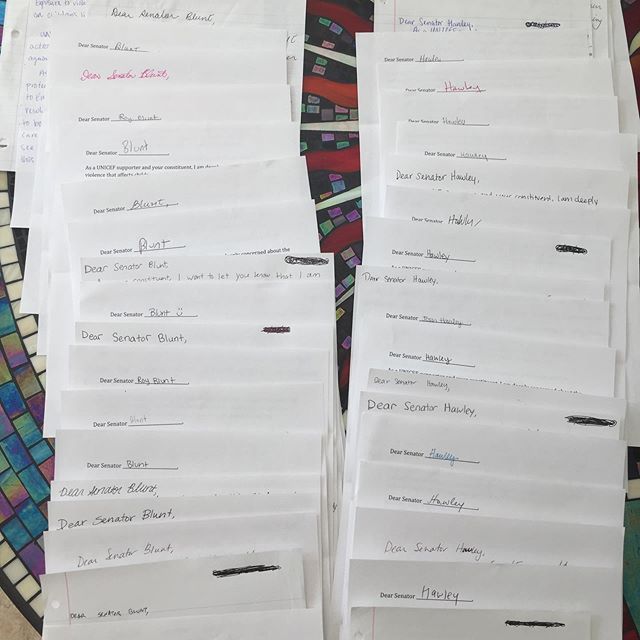
These letters from the collection boxes were packaged
together in a large envelope & mailed after the meeting. 


We talked about two bipartisan resolutions, S. Res. 112 (a framework to end all forms of violence against children) and S. Res. 511 (supporting funding for Gavi, the Vaccine Alliance). Mostly, however, we just talked about what our club was doing in the community and how we took an interest in advocacy, so we can build a relationship with this office. One of the senior co-leaders was able to join us to add her voice, as she’s been a leader for many years and seen the club evolve.

What was most interesting to me was what we learned about how Congressional aides do their jobs these days. These two had never used Zoom before, which surprised me, so they got to learn tips and tricks from a high school sophomore, junior, and senior! 

As I mentioned earlier with the quote that started this blog, they are really busy with COVID-19 stuff, trying to help their constituents navigate government agencies. One aide spends nearly all his time answering questions about the stimulus checks, when he himself still hadn’t received his own check! 

The aides for this office are working from home, so they can’t check the mail every day even when there’s a flood of constituents reaching out with various questions and demands. This meeting was a positive one for UNICEF Club and for our relationship to the Senator’s office— we all learned new lessons about communication between Congress and constituents. 

I’m looking forward to another year of UNICEF Club when we return to school, with more advocacy actions to follow. If you feel ready to take action with us, I recommend visiting https://www.unicefusa.org/help/advocate to find some handy, customizable emails that will actually reach Congress in a timely manner!